
Hidden Risks of Cat Paw Swelling
As a cat owner, it is inevitable to notice abnormalities in your pet during daily interaction—paw or leg swelling is one of the most common and easily overlooked conditions. Many people dismiss mild swelling as a “minor bump,” but they are unaware that it may hide serious hidden dangers such as infections, organ lesions, or even tumors. Cats are naturally tolerant and good at hiding pain; by the time the swelling is obvious and they show discomfort, the condition may have progressed. This article will comprehensively break down the relevant knowledge about cat paw swelling from emergency judgment, cause analysis, diagnosis and treatment methods to home prevention, helping owners quickly identify risks, respond scientifically, and protect their cats’ limb health.
Emergency Judgment: Which Swellings Require Immediate Veterinary Care
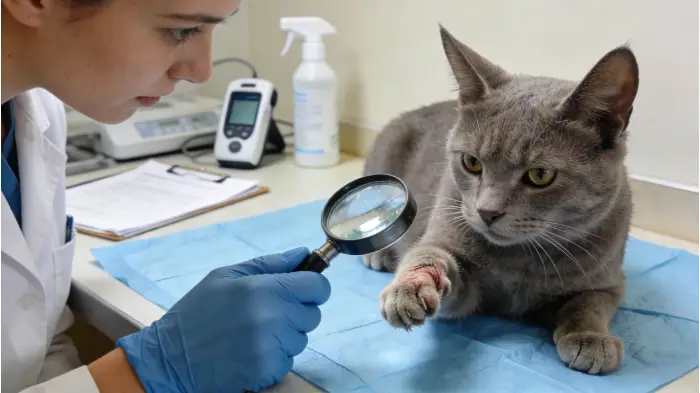
When facing cat paw swelling, the primary task is to distinguish between “emergency situations” and “observable situations” to avoid delaying the best treatment time. If any of the following 6 signs appear, take your cat to the veterinary clinic immediately and do not handle it yourself:
- Severe swelling that worsens rapidly in a short period of time, even more than twice the size of a normal paw, and the cat shows obvious resistance when touched (hissing, struggling, scratching);
- Swelling in multiple limbs, not just a single paw or leg, which may be accompanied by edema in other parts of the body;
- Obvious signs of trauma at the swollen area, such as bleeding, abrasions, bone deformities, or the cat dragging its limbs and being unable to stand normally;
- Witnessing the cat experience a traumatic event, such as a car accident, attack by other animals, or falling from a height, regardless of whether the swelling is obvious;
- Accompanied by systemic abnormal symptoms, such as difficulty breathing, lethargy, confusion, loss of appetite, or elevated body temperature;
- Swelling that does not improve for more than 48 hours or worsens during the period, even if the cat seems lively, it needs timely examination.
If it is only mild swelling and the cat’s diet, activity, and mental state are normal without obvious pain response, you can observe it at home for 24-48 hours. However, you need to restrict the cat from going out, reduce strenuous activities such as jumping and running, to avoid worsening the swelling.
Causes of Swelling: Systemic, Local and Paw-Specific Issues
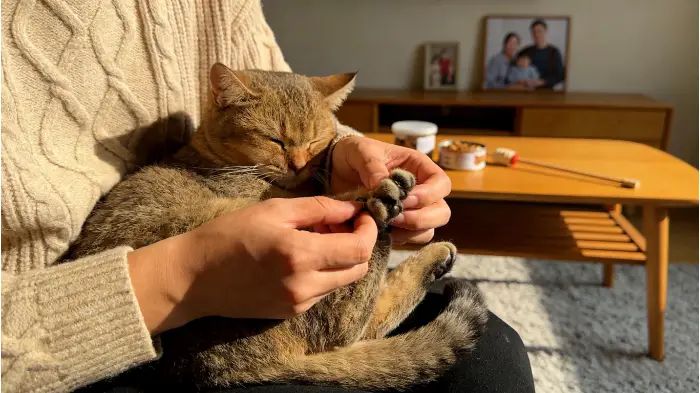
The causes of cat paw swelling are complex and can be divided into three categories—systemic issues, local issues, and paw-specific issues. Different types of causes correspond to different risk levels and need to be judged targetedly.
(I) Systemic Issues (Mainly Swelling in Multiple Limbs)
When a cat has swelling in multiple legs at the same time, it usually indicates an abnormality in the internal organs or the overall system, rather than a simple local injury. The core reason is “fluid regulation imbalance” in the body, leading to fluid leakage into the limb tissues. Common incentives include:
- Heart disease: Decreased cardiac pumping function slows down blood flow, preventing normal fluid circulation, which then accumulates in the extremities (paws, legs), similar to “water leakage from a blocked water pipe”;
- Liver and kidney diseases: The liver cannot synthesize enough protein to maintain blood osmotic pressure, and the kidneys experience protein loss, both of which can lead to fluid leakage, similar to “a sieve with too large holes” and “a leaking wooden barrel” respectively;
- Systemic infection: The spread of bacterial, viral, or fungal infections to the whole body causes an inflammatory response, leading to limb swelling;
- Allergic reactions: After contact with allergens (such as special foods, pollen, drugs), generalized edema occurs in the whole body, which may be accompanied by skin itching and rashes;
- Drug side effects: Ingestion or improper use of certain drugs may cause limb swelling. In particular, it should be noted that human painkillers (such as acetaminophen) are highly toxic to cats and must not be fed.
(II) Local Issues (Mainly Swelling in Single/Double Limbs)
Swelling in a single paw or leg is mostly a local injury or lesion, which is relatively easy to investigate. Common causes include:
- Trauma and strain: When cats are active at night or chasing toys, they may experience sprains, bumps, or muscle and joint strain due to improper long-term activities, leading to swelling;
- Abscess: After a cat fights or is scratched by a foreign object, the wound is infected by bacteria to form a closed abscess. The swollen area is usually accompanied by fever and obvious pain when touched;
- Arthritis: More common in elderly cats, degenerative joint lesions lead to joint stiffness and swelling, and lameness may occur during activity;
- Insect bites or stings: Local allergic or inflammatory reactions occur after being bitten by spiders, mosquitoes, bees, etc. The swelling usually comes and goes quickly, but some cats may have severe allergies;
- Vaccine reaction: Temporary swelling may occur at the injection site after vaccination, usually without other discomfort, and it can subside on its own in 1-2 days, but it is necessary to inform the veterinarian for filing in a timely manner.
(III) Paw-Specific Issues (Swelling Only in Paw Pads, Toes)
If the swelling is only concentrated in the paw pads, toes, or toe gaps, it is necessary to be alert to paw-specific diseases. Common situations include:
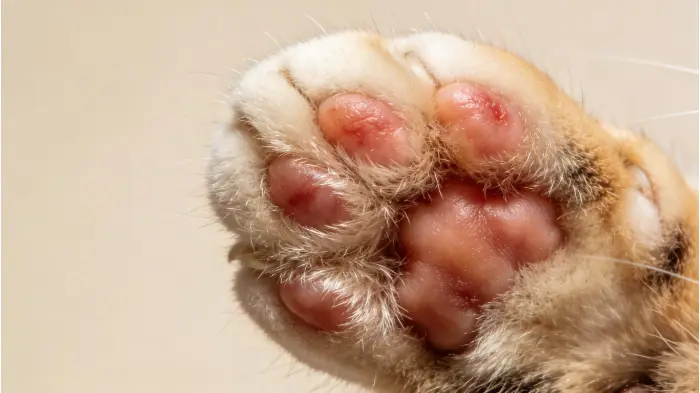
- “Pillow Foot”: An immune-related disease characterized by fluffy, swollen, and soft paw pads, similar to “pillows,” which may be accompanied by pain and lameness;
- Paw pad ulcers: Viral infections (such as calicivirus) or trauma cause damage and ulcers to the paw pads, which then lead to swelling and infection;
- Tumor metastasis: In rare cases, tumors in parts such as the lungs may metastasize to the toes, leading to paw swelling, which is usually accompanied by discoloration and ulcers of the paw pads;
- Excessive licking: Due to stress, itching, and other reasons, cats lick their paws excessively, leading to skin irritation, hair loss, and then secondary infection and swelling.
Veterinary Diagnosis and Treatment: Examination Items and Common Treatment Plans
When a cat has paw swelling, especially if it meets the emergency conditions, the veterinarian will gradually clarify the cause and give a targeted plan through the process of “inquiry-examination-diagnosis-treatment”. The owner needs to actively cooperate and provide accurate daily conditions.
(I) Inquiry and Preliminary Examination
The veterinarian will first conduct a comprehensive physical examination and ask the owner a series of key questions to sort out clues, such as: the time when the swelling appeared (sudden or gradual), the location of the swelling, whether there is a history of trauma, the cat’s recent diet, drinking water, defecation habits, and whether it has been in contact with foreign objects or other animals. These questions may seem trivial, but they can help the veterinarian rule out irrelevant factors and lock in possible causes—just like a “detective solving a case”, piecing together details to find the truth.
(II) Common Examination Items
According to the preliminary judgment, the veterinarian will recommend corresponding examination items, which are divided into two categories: basic examinations and professional examinations:
- Basic examinations: Suitable for most cases, including blood tests (detecting liver and kidney function, protein levels, inflammatory indicators), urine tests (screening for kidney diseases and protein loss), and X-ray examinations (ruling out fractures, joint lesions, and tumors);
- Professional examinations: Suitable for difficult cases, including ultrasound examinations (observing soft tissue lesions and cardiac function), biopsies (sampling suspicious masses to determine whether they are tumors), and infectious disease tests (screening for viral and bacterial infections).
Tip: After the examination, it is recommended that the owner ask for a copy of the examination results for reference during subsequent follow-up visits or referrals to avoid repeated examinations.
(III) Targeted Treatment Plans
The treatment plan depends entirely on the cause, and there is no uniform “universal therapy”. Common treatment methods include:
- Infectious diseases (abscesses, bacterial infections): Use cat-specific antibiotics, which usually need to be taken continuously for a period of time. Some abscesses may require puncture and drainage to remove pus;
- Inflammation and allergies: Use steroids or immunomodulators to relieve inflammation and allergic reactions and reduce swelling;
- Pain relief: Prescribe cat-specific painkillers, avoid using human drugs, and reduce the cat’s pain and discomfort;
- Fluid accumulation (heart, liver and kidney diseases): Use diuretics to promote the excretion of excess fluid in the body, and at the same time cooperate with drugs to treat the primary disease;
- Trauma and tumors: Severe trauma may require suturing and fixation, while tumors may require surgical resection, and chemotherapy or radiotherapy may be used subsequently according to the situation;
- Joint problems (arthritis): Use joint health products and anti-inflammatory drugs, and at the same time suggest adjusting the home environment to reduce the cat’s joint burden.
Most cats will have gradual swelling subsidence and return to normal activities after standardized treatment, especially cases of local injuries with a good prognosis; swelling caused by systemic diseases requires long-term cooperation with treatment to control the primary disease.
Basic Knowledge of Cat Paw Anatomy: Why Swelling Occurs and How to Observe Correctly
Understanding the anatomical structure of a cat’s paw can help owners better understand “why swelling occurs in the paw” and observe abnormalities more accurately to find problems in a timely manner.
(I) Characteristics of Feline Circulatory System
The reason why cats can “land on all fours” is inseparable from their special circulatory system—there are exclusive valves in the veins, which can ensure smooth blood return to the heart even when upside down. However, this structure also has disadvantages: when blood circulation is blocked (such as decreased cardiac function, blood vessel blockage), fluid will quickly seep into the limb tissues, and the paw, as the part farthest from the heart, becomes the first and most obvious place where swelling occurs, similar to the principle of “easy water accumulation at the foot of a mountain”.
Fortunately, cats have a strong ability to heal themselves. As long as they are found and cared for correctly in a timely manner, most mild swelling and injuries can recover quickly.
(II) Paw Pads: The Cat’s “Natural Shock Absorbers”
A cat’s paw pads are not only cute but also a “natural engineering marvel”, undertaking important functions of buffering, heat dissipation, and protection. Their structure includes:
- Fat deposits: Similar to built-in “memory foam”, they buffer impact force when jumping and walking, protecting joints and bones;
- Sweat glands: A cat’s paw pads are one of the main heat dissipation parts. In hot weather, the paw pads secrete sweat to help regulate body temperature;
- Tough outer layer: The surface of the paw pad has a thick, tough skin that can resist friction and foreign object scratches on rough ground.
It should be noted that a cat’s paw pads may swell independently of other parts of the leg. Therefore, when observing, not only the legs but also the paw pads and toe gaps should be carefully checked to avoid missing minor abnormalities.
Home Prevention: Reduce Swelling Risks from Environment to Care
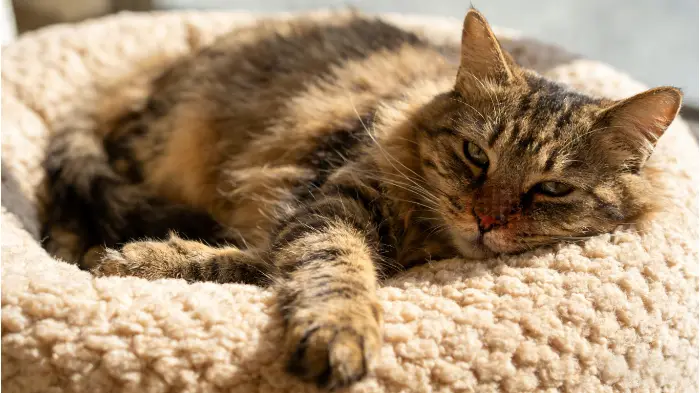
For cat paw swelling, “prevention is better than cure”—by optimizing the home environment and developing regular care habits, the probability of swelling can be effectively reduced, and the cat’s paw health can be protected.
(I) Create a Safe Home Environment
The root cause of many cat paw swelling is hidden safety hazards at home. Owners can investigate and rectify from the following points:
| Hazard Type | Potential Risks | Rectification Measures |
| Unstable Window Screens | When cats climb, they may break through the window screens and fall from heights, leading to paw and leg fractures and swelling. | Replace with pet-specific reinforced window screens and check the firmness of the window screens regularly. |
| Irritating Cleaning Products | Contact with the cat’s paws may cause chemical burns and skin irritation, leading to swelling. | Choose pet-friendly cleaning products, and wipe the floor with clean water after cleaning to avoid residue. |
| Scattered Small Foreign Objects | Small foreign objects such as Lego blocks, thumbtacks, and broken glass may pierce the paw pads, leading to infection and swelling. | Clean the floor every day, put away small items, and avoid cats ingesting or stepping on them by mistake. |
| Entangling Toys | Toys such as ropes and yarn may entangle the cat’s limbs, block blood circulation, and cause swelling. | Supervise cats when playing, put away entangling toys in a timely manner after playing, and avoid contact alone. |
(II) Correct Methods for Regular Paw Checks
It is recommended to integrate “paw checks” into daily interactions, such as gently checking when the cat is snuggling or acting coquettishly. This will not arouse the cat’s disgust and can find abnormalities in a timely manner. Specific check points include:
- Between toes: Check for debris, hair entanglement, or red, inflamed skin;
- Paw pads: Observe for cracks, damage, swelling, discoloration, and feel for hard lumps when touching;
- Nail beds: Check if the nails are too long or broken, and if the nail beds are inflamed or bleeding;
- Leg symmetry: Compare the legs and paws on both sides to observe if there is obvious swelling or deformity and ensure normal movement.
Tip: You can combine the check with snack rewards, giving a small amount of snacks after each check, so that the cat can gradually adapt to, or even look forward to, the check and reduce resistance.
VII. Special Cases: Abnormal Licking, Nutritional Impacts and Breed/Age Differences
In addition to the common causes of swelling, a cat’s licking behavior, daily nutrition, as well as breed and age differences, can also affect paw health and cause swelling, which need to be focused on.
(I) Abnormal Licking: Judging Health from Behavior
It is normal for cats to groom their fur, but excessive licking of paws may be a “distress signal”. It is necessary to distinguish between normal and abnormal licking:
- Judgment of abnormal licking: If the time a cat spends licking its paws exceeds the time spent playing, eating, and sleeping, and the paws have hair loss, red skin, and swelling, it is excessive licking, which may cause “lick granulomas” and aggravate infection;
- Hidden meanings of licking parts: Excessive licking of different parts corresponds to different problems—licking of front paws is mostly related to stress (similar to humans biting their nails); licking of hind legs may indicate joint pain; licking between toes may be due to allergies or foreign body stimulation; repeated licking of a single part may be due to trauma or insect bites;
- Solutions: For mild excessive licking, you can relieve the cat’s stress by increasing play time and providing interactive toys; if accompanied by swelling and infection, take it to the veterinarian in a timely manner, and wear an Elizabethan collar to avoid further licking and worsening of the condition.
Fun Fact: Cats have scent glands on their paws. Excessive licking is sometimes a way for them to “reset their own scent” and relieve stress. Owners can pay more attention to their cats’ emotional state.
(II) Nutrition: The “Invisible Support” for Paw Health
A cat’s paw health is inseparable from adequate nutritional supply. The following nutrients are particularly important for paw health:
- Omega-3 fatty acids: Can reduce inflammatory reactions, improve skin and paw pad health, and are commonly found in fish oil and deep-sea fish;
- Zinc: Promotes skin healing, enhances skin resistance, and prevents paw pad chapping and infection, which is more common in high-quality meat and animal liver;
- Vitamin E: Protects paw pad skin, reduces oxidative damage, and is commonly found in eggs, spinach, and other foods;
- Biotin: Strengthens nails and paw pads, prevents brittle nails and paw pad cracking, and is commonly found in egg yolks and animal liver.
Supplementation Suggestion: Most high-quality commercial cat foods already contain these nutrients with a balanced ratio, so there is no need to make cat food at home; if supplementation is needed, it should be carried out under the guidance of a veterinarian or pet nutritionist to avoid excess.
In addition, hydration is also easy to be ignored—cats originated from deserts and have a weak sense of thirst. Dehydration can lead to edema, which indirectly increases the risk of paw swelling. Owners can encourage cats to drink more water by placing multiple water bowls, using cat water dispensers, and adding water to wet food.
(III) Breed and Age: Risk Differences Among Different Cats
- Breed differences: Due to body size and genetic characteristics, some cat breeds are more prone to paw swelling-related problems—Maine Coons are large in size and have high blood circulation pressure; Ragdolls have a genetic predisposition to heart disease, which is prone to fluid accumulation; Persians have flat faces, which may affect breathing and oxygen delivery, indirectly affecting blood circulation; Scottish Fold cats have special cartilage structures, so their joint health is easily affected, and joint swelling may occur;
- Age differences: Elderly cats (over 12 years old) are a high-risk group for paw swelling. 90% of elderly cats suffer from arthritis, which is manifested by mild swelling around the joints, slow movement, and hesitation in jumping; at the same time, the liver and kidney functions of elderly cats decline, which may also cause systemic swelling.
Coping Methods: For high-risk breeds, regular physical examinations are required, focusing on heart and joint health; for elderly cats, the home environment needs to be adjusted, providing heated cat beds, low-entry litter boxes, and joint health products to reduce joint burden, and regular paw checks to find abnormalities in a timely manner.
Frequently Asked Questions (FAQ)
Q: What should I pay attention to when observing my cat’s mild paw swelling at home?
A: The core is “restricting activity and close observation”—keep the cat indoors, avoid jumping and running, and provide a comfortable cat bed to encourage rest; take photos of the swollen area every day to compare changes in swelling; observe the cat’s diet, drinking water, defecation, and mental state, and do not give the cat human drugs; if the swelling does not improve or even worsens within 24-48 hours, make an appointment with a veterinarian immediately.
Q: If my cat’s four legs are swollen, what is the most likely reason?
A: It is mostly a systemic problem. The three most common reasons are heart disease (fluid accumulation caused by poor blood circulation), liver and kidney diseases (fluid leakage caused by protein loss), and severe systemic infection. This situation is an emergency and requires immediate veterinary treatment to clarify the cause and carry out targeted treatment through blood tests, ultrasound, and other items.
Q: My cat’s paw pads are swollen but there is no trauma. What could be the problem?
A: It may be “pillow foot” (an immune-related disease), infection caused by excessive licking, insect bite allergies, or tumor metastasis in rare cases. It is recommended to observe whether the cat has excessive licking behavior and check if the paw pads are discolored or ulcerated; if the swelling persists for more than 24 hours, take it to the veterinarian to investigate the cause and avoid missing serious problems.
Q: What do I need to prepare in advance when taking my cat to see a veterinarian for paw swelling?
A: Sort out key information in advance, including the time when the swelling appeared, the location of the swelling, whether there is a history of trauma, changes in the cat’s recent diet and activity, and whether it has been in contact with foreign objects or other animals; if there are previous physical examination reports and test results, bring them along; at the same time, prepare the cat’s usual snacks and towels to reduce the cat’s tension during the trip to the veterinarian.
Q: Is it normal for my cat’s paw to swell after vaccination?
A: Under normal circumstances, temporary mild swelling may occur at the injection site after vaccination, usually without other discomfort, and it can subside on its own in 1-2 days, which is a normal vaccine reaction. However, it is necessary to inform the veterinarian for filing in a timely manner. If the swelling worsens significantly or is accompanied by fever, lethargy, and other abnormalities, take it to the veterinarian immediately to investigate allergies or infections.