
Introduction: Those “Embarrassing” Toilet Stares
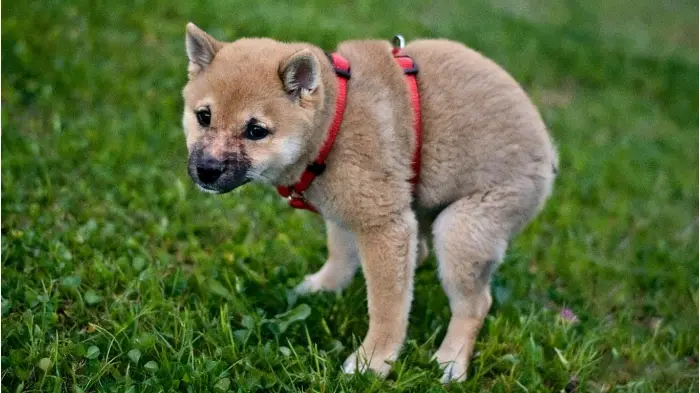
As a dog owner, almost everyone has had such an experience: when you take your dog out to go to the toilet, it bends down to prepare to poop, but turns its head towards you, staring at you intently with its wet eyes. You may instinctively look away, feeling that this eye contact during a “private moment” is too embarrassing, and even wonder: Is it deliberately “making things difficult” for me? Does it think I haven’t given it enough privacy?
In fact, this behavior of dogs has nothing to do with “making things difficult” or “privacy”, nor is it an abnormal behavior—it is just using its purest way to convey emotions and seek connection with you. Unlike humans who feel shy or avoid toilet scenes, every stare of a dog hides its trust, dependence on you, or an unspoken “small need”. Today, we will put aside inherent perceptions and reinterpret the staring behavior of dogs while pooping to understand the whispers hidden in their eyes.
Core Reasons Why Dogs Stare at You While Pooping (Non-repetitive from the Original)
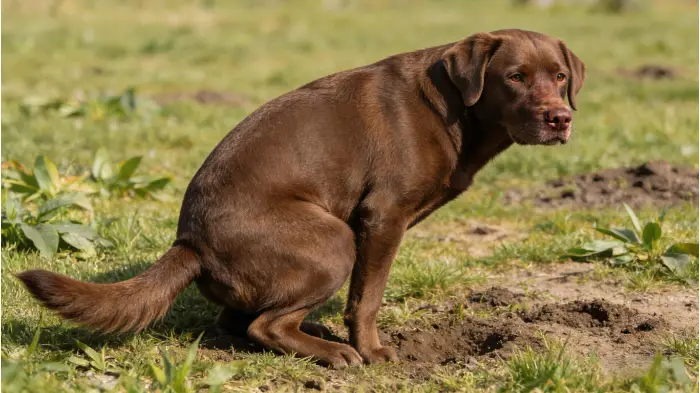
Many people mistakenly think that dogs staring at people is a “habit” or “coincidence”, but animal behavior research shows that most of these stares are actively initiated by dogs, with 3 core reasons behind them, each reflecting their special feelings for you.
1. Treat You as a “Safe Backer” and Seek Protection
When a dog poops, its body is in a relaxed and vulnerable state—at this time, it cannot run quickly or respond to sudden dangers in time, which is the vigilance engraved in its genes. In the wild, when the ancestors of dogs pooped, they would arrange companions to stand guard nearby to prevent attacks by predators; in the family, you are its most trusted “companion”, even a “leader”.
It stares at you not to let you “supervise” it, but to confirm: You are here, and I am safe. Just like a child who stares at an adult’s direction to seek peace of mind when staying alone in the dark, a dog also gains a sense of security by staring at your figure, so that it can let go of its vigilance and successfully finish pooping. This staring behavior is especially obvious in shy and sensitive dogs.
2. “Report Its Status” to You and Convey the Signal “I’m Doing Well”
There is a unique “communication tacit understanding” between dogs and their owners, and staring while pooping is one of the silent “reports”. In a dog’s cognition, pooping is not only a physiological need but also a “status feedback”—it will tell you “I am pooping, everything is normal” by staring at you, just like completing a simple “report”.
This behavior is particularly common in puppies and will be retained even when they grow up. Especially when you pay extra attention to its pooping habits (such as during toilet training), the dog will keenly perceive that “pooping” is something that needs to be known to you, so it will use staring to ensure that you receive its “signal”.
3. Expect “Positive Feedback” and Continue Training Memories
Many owners give positive feedback such as snacks, praise or petting to their dogs after they poop correctly during toilet training. The memory brought by this training will be deeply imprinted in the dog’s mind, and even when it grows up and no longer needs deliberate training, it will subconsciously expect this feedback.
It stares at you, actually silently “waiting for a reward”—not because it is really greedy, but because it hopes to get your approval and confirm that it “did the right thing”. This expectation is essentially a manifestation of the dog wanting to please you, establish a closer connection with you, and also a reflection of its dependence on you.
Analysis of Differences in Staring Behaviors Among Different Dogs
Not all dogs will stare intently at their owners while pooping; some dogs will focus on pooping and not look at you at all, while others will look back frequently, their eyes never leaving you—this difference is mainly related to the dog’s breed, personality, and the way you get along with it.
1. Breed Differences: Clingy Breeds Love Staring More
Breeds with clingy personalities and strong dependence on their owners, such as Golden Retrievers, Labrador Retrievers, and Poodles, are more likely to stare at their owners while pooping. These dogs are naturally fond of staying with their owners, hoping to get their owners’ attention no matter what they do, and they are even more inseparable from their owners’ “companionship” during the vulnerable moment of going to the toilet.
On the other hand, breeds with independent personalities and strong vigilance, such as Shiba Inus, Huskies, and Afghan Hounds, tend to focus on themselves while pooping and rarely stare at their owners. They pay more attention to “self-vigilance”, and even if their owners are around, they will first observe the surrounding environment. This is their nature, not a sign of distrust.
2. Personality and Interaction Mode: The More Trust, the More Staring
A dog’s personality also affects its staring behavior: shy and sensitive dogs gain comfort by staring at their owners because they lack a sense of security; lively and cheerful dogs stare at their owners more to expect praise and seek interaction.
In addition, the way you get along with your dog is also crucial. If you often accompany it, treat it gently, and give it enough care and a sense of security, it will stare at you more frequently while pooping; on the contrary, if you rarely pay attention to it or even often scold it, it may deliberately avoid you while pooping and will not take the initiative to make eye contact with you.
Correct Ways for Owners to Respond to Staring
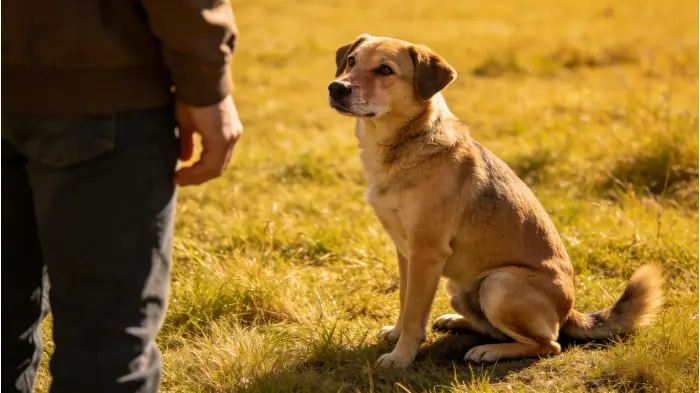
When facing a dog staring at you while pooping, many owners fall into two extremes: either deliberately avoid it and dare not make eye contact, or stare at the dog all the time, making it feel nervous. In fact, the core of dealing with this behavior is to “respect the dog’s needs and keep it natural and comfortable”, which can be divided into 3 specific situations.
1. The Dog Stares Calmly Without Signs of Anxiety
If the dog stares at you calmly with a relaxed body while pooping, only glancing at you occasionally without any signs of anxiety or nervousness, you can completely stay natural—no need to deliberately avoid it, nor stare at it all the time. You can stand gently aside, give it a soft look or a slight nod occasionally to convey the signal “I’m here”, making it more at ease.
2. The Dog Stares Frequently and Appears Anxious
If the dog stares at you tightly all the time while pooping, with a stiff body and a drooping tail, or even has difficulty pooping and frequently interrupts, it may be anxious. At this time, you can comfort it softly, such as gently saying “It’s okay, I’m here”, and slowly step back a few steps to give it some space. Do not stare at it all the time to avoid increasing its sense of tension.
3. The Dog Still Stares at You After Pooping
If the dog still stares at you with its tail wagging gently after pooping, it means it is expecting your praise or reward. At this time, you can praise it softly “Good job”, then give it a little snack (not too much) or gently pet its head to meet its expectation. This positive feedback will make the dog more secure and deepen the connection between you.
Health Signals Behind Pooping Behaviors That Cannot Be Ignored
While we pay attention to the dog’s staring behavior, we must not ignore its overall state while pooping—the dog’s pooping habits and feces state are a “barometer” reflecting its physical health, and many health problems can be seen from pooping.
1. Abnormal Pooping Signals That Need Attention
Veterinarians remind that when a dog has the following abnormal pooping behaviors, it may be a signal of health problems and needs timely attention:
- Sudden change in pooping frequency: Suddenly increasing (more than 4 times a day, except for puppies) or decreasing (not pooping for more than 2 days);
- Difficulty pooping: Straining too hard while pooping, making painful noises, or taking too long to poop but only excreting a small amount of feces;
- Abnormal feces texture: Feces that are too hard (granular), too soft (shapeless, loose stools), or feces with blood streaks, mucus, or foreign objects;
- Abnormal feces color: Abnormal colors such as black, white, or yellowish-green that last for more than 1-2 days.
2. Standards for Healthy Feces
Many owners do not know how to judge whether their dog’s feces are healthy. In fact, the standard is very simple: healthy dog feces should be formed but not hard, moist but not sticky, with a uniform color (mostly yellowish-brown or brown), smooth and painless during pooping, and clean around the anus without residual feces after pooping.
If there is only a slight occasional abnormality (such as slightly soft feces), it may be caused by dietary changes, colds, etc., and you can observe it temporarily; but if the abnormal situation lasts for more than 48 hours, or is accompanied by symptoms such as listlessness and loss of appetite, you must take the dog to see a veterinarian in time to avoid delaying the condition.
How to Create a Comfortable Toilet Environment for Your Dog
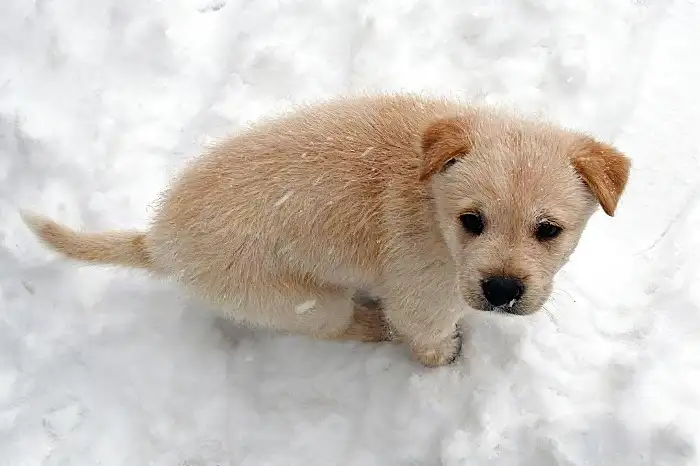
A dog’s toilet experience directly affects its mood and health. If you want your dog to be more relaxed while pooping, reduce anxiety, and not deliberately stare at you to seek a sense of security, we can start from 3 aspects to create a comfortable and reassuring toilet environment for it.
1. Fix the Toilet Location and Keep It Quiet
Dogs are habitual animals, and a fixed toilet location can make them more secure. It is recommended to take your dog to the same place to poop every day. This place should be quiet and spacious, away from noisy sounds (such as traffic noise, crowd noise) and unfamiliar animals, to avoid the dog being frightened and unable to poop at ease.
2. Give Enough Time and Do Not Urge
Many owners constantly urge their dogs to “hurry up” when taking them out to poop because they are in a hurry to go out or rush for time. But dogs need a certain amount of time to relax their bodies and complete their physiological needs while pooping. Urging will make them feel nervous and anxious, and even cause interruptions in pooping. Over time, it may lead to problems such as constipation. It is recommended to reserve at least 10-15 minutes each time you take your dog to poop and wait patiently for it to finish.
3. The Owner Stays Relaxed and Conveys Positive Emotions
Dogs’ emotions are easily affected by their owners. If the owner appears impatient and anxious when taking the dog to poop, the dog will also feel this negative emotion and become nervous. It is recommended that the owner keep a relaxed state while waiting for the dog to poop, such as walking gently and looking around. Do not stare at the dog all the time, nor show impatience, so that the dog can feel your calmness and it will be more relaxed.
Frequently Asked Questions (FAQs)
Q1: Is it abnormal for my dog to stare at me while pooping?
A: Completely normal. It’s an instinctive behavior showing dogs’ trust and dependence on you. As long as your dog poops smoothly and stays calm, no need to worry.
Q2: I don’t want to make eye contact with my dog. Will deliberately avoiding it hurt it?
A: No. Dogs only need to confirm you’re around. You can look away gently—just don’t leave their sight or show disgust, and they won’t be hurt.
Q3: What does it mean when my dog stares at me and keeps barking while pooping?
A: It’s likely anxiety, nervousness, or difficulty pooping. If feces are abnormal, it may be gastrointestinal issues; if normal, comfort it softly and give it space.
Q4: Will adult dogs still stare at me for rewards because of toilet training memories?
A: Yes. Dogs remember positive training deeply. A simple verbal praise or gentle pet is enough to meet their expectation—no need for snacks every time.
Q5: What if my dog suddenly stops staring at me and even deliberately avoids me?
A: It may be that your dog becomes more independent, or it’s unwell/low in mood, or your attitude has changed. Observe its state and investigate abnormalities timely.
Q6: Can I train my dog not to stare at me while pooping?
A: Possible but not recommended—it may confuse your dog. Instead, bring its favorite toy to divert its attention gently if you feel troubled.