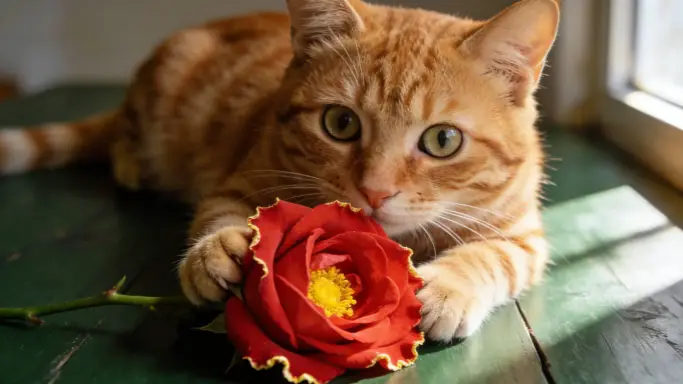

As a pet owner, the biggest concern when placing fresh flowers or planting green plants at home is “whether the plants will harm the cat”. As a popular flower, roses are often placed indoors and in courtyards. The claim that “roses are toxic to cats” is also widely circulated, making many cat owners want to appreciate the beauty of roses while worrying about endangering their furry friends. In fact, the relationship between roses and cats is not absolutely dangerous; the core risks are often in the details that people easily overlook. This article will detailedly break down the safety boundary between roses and cats, helping you easily balance flower appreciation and pet care.
Analysis of the Safety of Roses Themselves for Cats
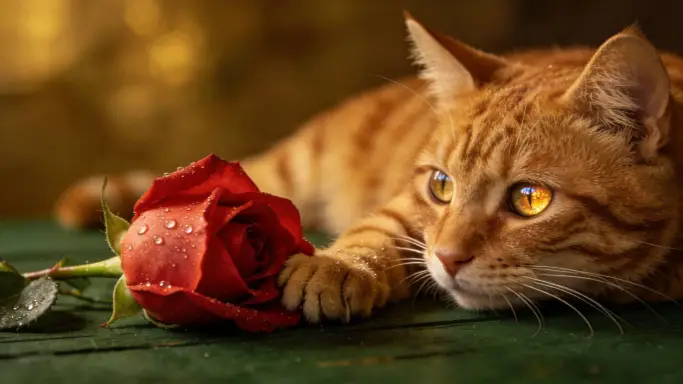
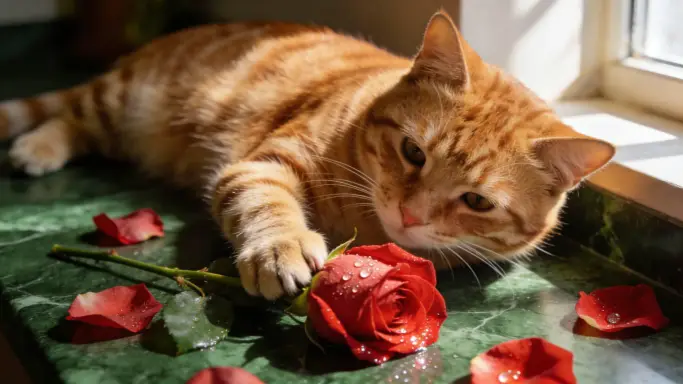
Many cat owners mistakenly believe that roses are toxic to cats, but this is a common misunderstanding: real roses (Rosa genus) are inherently non-toxic to cats. Whether it is fresh-cut roses bought from a flower shop or rose bushes planted in the courtyard, their petals and leaves do not contain substances harmful to cats.
There are many varieties of roses, with more than 150 natural species and countless artificially cultivated ones. However, all roses of the Rosa genus do not have components that are toxic to cats. Out of curiosity, cats occasionally smell, lick or even bite a small amount of rose petals, and no poisoning symptoms will occur, so owners do not need to be overly nervous. It should be noted, however, that the cat’s physiological structure determines that they cannot digest plants well, so “non-toxic” does not mean “can be eaten at will”.
Potential Risks Associated with Roses and Their Solutions
Although roses themselves are non-toxic, a series of details around roses may bring potential safety hazards to cats, mainly focusing on three aspects: harm from thorns, harm from chemical agents, and gastrointestinal discomfort caused by excessive consumption.
(1) Potential Hazards of Rose Thorns

Rose thorns are sharp and hard, which are the most direct safety hazard. Cats are lively and active, like to rub and climb, and are easily scratched by thorns; if a cat bites the flower stem, the thorns may damage the oral and throat mucosa, and in severe cases, even pierce the digestive tract, causing infections, abscesses and other problems.
Solutions: For fresh-cut roses placed at home, you can cut off the thorns on the flower stems in advance; for rose bushes planted in the courtyard, you can set up fences around them to prevent cats from approaching; if a cat is slightly scratched by thorns, you can wipe the wound with pet-specific wet wipes, apply non-toxic disinfectant, and closely observe for signs of infection; if you suspect that the cat has swallowed thorns or the wound is deep, you need to seek medical attention immediately.
(2) Fatal Risks of Chemical Agents
More dangerous than rose thorns are the chemical products used by humans for roses. Fresh-cut roses are usually paired with flower preservatives, and courtyard roses are sprayed with insecticides and fertilized to prevent insects and promote growth. These chemical substances are highly toxic to cats, and a small amount of contact may cause poisoning.
Common symptoms of poisoning: vomiting, diarrhea, loss of appetite, unsteady walking, seizures, difficulty breathing, etc. Solutions: After buying fresh-cut roses, immediately discard the preservative package and rinse the flower stems with clean water; when planting roses in the courtyard, choose pet-safe agents or adopt natural insect prevention methods (such as garlic and mint for insect repellent); if you find that the cat has poisoning symptoms, contact a veterinarian immediately and do not delay.
(3) Gastrointestinal Discomfort Caused by Excessive Consumption
Cats are obligate carnivores, and their digestive systems cannot decompose plant fibers well. Even if rose petals are non-toxic, if a cat eats a large amount, it may cause mild gastrointestinal discomfort, such as vomiting, diarrhea, loss of appetite and other symptoms. Solutions: If you find that the cat is gnawing on rose petals, there is no need to panic, stop it from contacting, provide plenty of clean water, and observe closely; if the symptoms last for more than 24 hours, consult a veterinarian.
Confusing “Fake Roses” and Toxicity Warnings
Many plants with “rose” in their names are not real roses of the Rosa genus, and many of them are highly toxic to cats, which is the main reason why many cat owners misjudge the risks. The following common “fake roses” need to be paid special attention to:
- Desert Rose (Adenium obesum): Also known as Impala Lily, the whole plant is toxic. Ingestion will cause vomiting and diarrhea in cats, and in severe cases, it will cause heart problems and even be life-threatening.
- Christmas Rose (Helleborus niger): Not a rose, it belongs to the Ranunculaceae family and is highly toxic. Ingestion will affect the cat’s nervous system, causing convulsions, coma and other symptoms.
- Primrose (Primula vulgaris): Some varieties have “rose” in their names. Ingestion will cause vomiting and diarrhea in cats. Although its toxicity is not as strong as the previous two, it should also be avoided.
Identification method: When buying plants, check the scientific name on the label. The scientific name of a real rose is “Rosa”; if you are not sure, you can consult the flower shop clerk, nursery staff, or use a plant identification app to confirm, so as to avoid buying toxic varieties by mistake.
Cat-Friendly Flowers and Garden Creation Suggestions
If you want to create a beautiful flower environment while ensuring the safety of cats, you can choose non-toxic flowers for cats, and optimize the planting and placement methods to create a cat-friendly space.
(1) Recommended Cat-Friendly Flowers
- Sunflower: The flowers are bright, completely non-toxic to cats, and have no thorns. They are suitable for indoor placement and courtyard planting. The only thing to note is that the flower stems are relatively hard, and a large amount of gnawing by cats may cause mild gastrointestinal discomfort.
- Spider Plant: The leaves are elegant, non-toxic and harmless. Even if cats occasionally gnaw on them, there is no risk, and it can also add greenery to the room.
- African Violet, Orchid: The flowers are beautiful and non-toxic to cats, suitable for indoor potted placement.
- Cat Grass: Wheat grass, oat grass, etc., are “safe snacks” for cats. They can not only satisfy the cat’s instinct to gnaw on plants, but also help expel hairballs.
(2) Tips for Creating a Cat-Friendly Garden
- Planting Zoning: Separate toxic plants from safe plants. Safe plants can be planted in areas easily accessible to cats, while toxic plants can be isolated by fences.
- Avoid Chemical Agents: Use organic fertilizers and natural insect prevention methods throughout the process, and eliminate the use of insecticides and herbicides harmful to cats.
- Increase Vertical Space: Cats like to climb. You can build flower racks, place elevated potted plants, and plant safe plants of different heights to meet the cat’s desire to explore.
- Provide Alternatives: Place cat grass and catnip in the garden and indoors to divert the cat’s attention from other flowers and reduce gnawing behavior.
Physiological Principles of Plant Toxicity to Cats
Why are some plants harmless to humans but highly toxic to cats? The core reason lies in the unique physiological structure of cats—their livers lack specific enzymes to break down certain plant compounds, making it impossible to effectively metabolize these substances, thereby causing poisoning.
Humans are omnivores, and their digestive systems can decompose plant fibers well. The liver can also secrete a variety of liver enzymes to deal with harmful substances in plants; while cats are obligate carnivores, they have gradually lost the ability to decompose plant compounds in the process of evolution, and the types and quantities of liver enzymes are limited. Therefore, many plants that are safe for humans are fatal to cats (such as lilies).
An exception is catnip (Nepeta cataria). The nepetalactone it contains can make 50%-70% of cats produce harmless euphoria. It is not only non-toxic, but also can relieve the cat’s pressure, making it a safe plant suitable for cats. This also reminds us that when choosing plants for cat-raising families, we must understand their characteristics in advance to avoid pitfalls.
Frequently Asked Questions (FAQ)
- Q: Can rose petals make cats sick? A: They are inherently non-toxic. A small amount of consumption is harmless, but a large amount may cause mild vomiting and diarrhea. Seek medical attention if discomfort persists.
- Q: What should I do if my cat swallows a rose thorn? A: Check the mouth for visible thorns and gently remove them, observe the symptoms closely, and consult a veterinarian for confirmation whether there are abnormalities or not.
- Q: Are insecticides on roses harmful to cats? A: Yes, they may cause poisoning. Use pet-safe agents or natural insect prevention methods, and seek medical attention immediately if poisoning is found.
- Q: How to distinguish real roses from fake ones? A: Check the scientific name (the scientific name of real roses is “Rosa”). If you are not sure, consult the clerk or use a plant identification app.
- Q: What alternative flowers to roses are suitable for cat-raising families? A: Sunflowers, spider plants, African violets, cat grass, etc., are all non-toxic to cats.