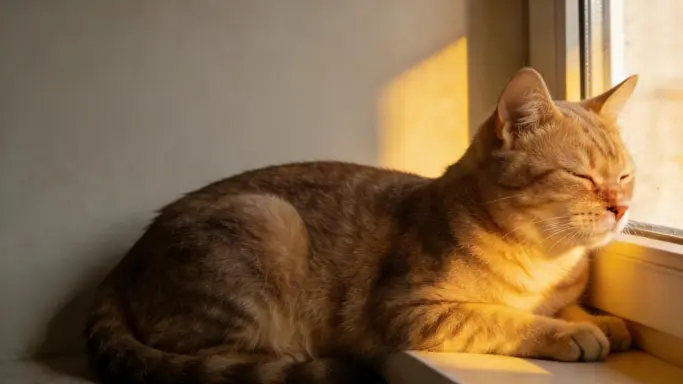

Cats have always been known for their cold and mysterious image. Many cat owners often have such doubts: their cats sometimes rub against their legs to show affection, sometimes suddenly fluff up and dodge, and sometimes stare quietly without approaching. What are they thinking? In fact, cats are never reluctant to express their emotions; their way of communication is just not the language familiar to humans, but hidden in every subtle body movement. The tilt of the ears, the swing of the tail, the blink of the eyes, and even the direction of the whiskers are all “codes” for them to convey emotions and needs. Understanding these body languages can not only help us accurately capture cats’ joys and sorrows, but also narrow the distance with our pets, establish a trusting and tacit intimate relationship, and make the cat-raising life warmer and smoother.
Interpretation of Signals from Cats’ Core Body Parts
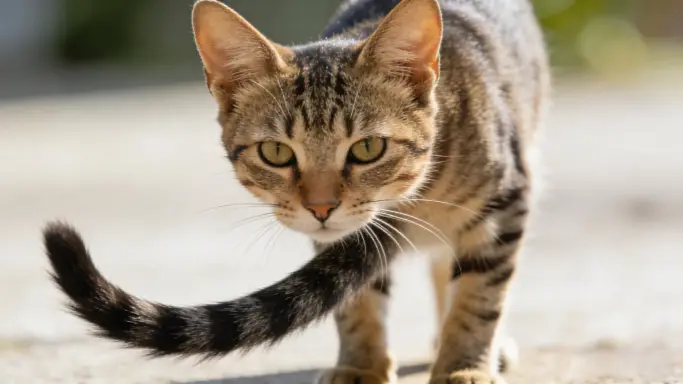
Cats’ body language is mainly concentrated in several core parts. Every subtle change in each part corresponds to a different emotional state. Mastering these key signals allows you to easily understand your cat’s “inner thoughts”.
(1) Ears: Cats’ “Emotional Barometer”
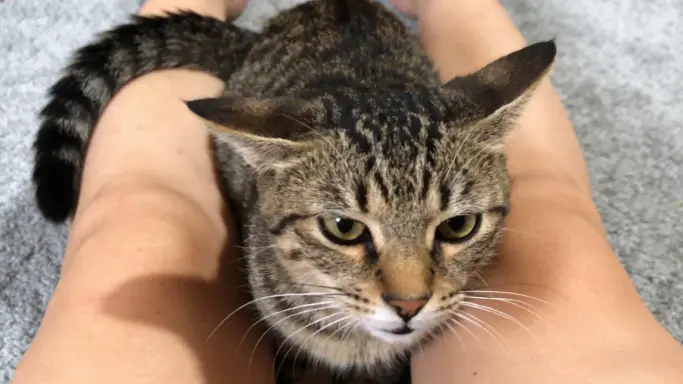
Cats’ ears are extremely flexible, able to rotate and tilt freely, making them one of the most intuitive parts reflecting their emotions. When a cat’s ears are upright and slightly forward, it means it is in an alert and awake state, full of curiosity about the surrounding things—for example, when hearing a strange sound or seeing a moving small object, it will show this posture. If the ears are pressed back tightly against the head, even against the cheeks, this is a signal that the cat is feeling fear, anxiety, or anger. At this time, it may be in a tense state and needs enough space; do not touch it easily. When the ears swing gently back and forth, it indicates that the cat is carefully listening to the surrounding movements and is in a highly focused state—maybe it is catching the sound of a mouse, or paying attention to the owner’s footsteps.
(2) Eyes: Cats’ “Window of Trust”
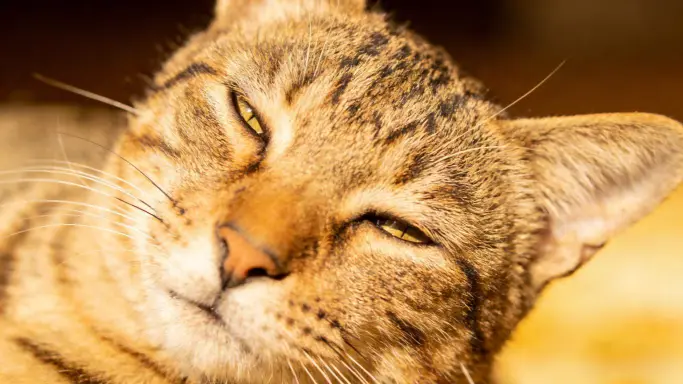
Eyes are the window to the soul, especially for cats. Changes in their eyes hide their most real emotions and trust. If a cat blinks slowly at you, even squints its eyes, this is an extremely strong signal of trust, equivalent to a cat’s “kiss”. It means it feels extremely comfortable and at ease by your side; at this time, you can blink gently in response to its affection. When a cat’s pupils dilate, it needs to be judged based on the scene: it may be a sign of excitement, such as seeing a favorite toy, or a reaction to fear and tension, such as being in an unfamiliar environment, and in a few cases, it may also be a precursor to aggression. If a cat squints its eyes with a soft gaze, it means it is in a relaxed state, probably enjoying a leisurely time; gently stroking its forehead at this time will make it feel more secure.
(3) Tail: Cats’ “Emotional Baton”
The tail is the most expressive part of a cat’s body language. Different swing ranges and postures convey very different emotions. When a cat’s tail is straight up, even with the tip slightly curved, it means it is in a happy and confident mood—usually when it just wakes up or greets the owner home. At this time, if you take the initiative to approach it, it will most likely rub against you actively. If the tail hangs down, even tucked between the legs, this is a signal that the cat is feeling scared and timid, possibly frightened or in an unfamiliar environment, and needs sufficient comfort and space. A tail swinging quickly and forcefully from side to side means the cat is in an irritable and annoyed state; do not provoke it at this time, otherwise you may be scratched. A slow and steady tail swing indicates that the cat is observing the surroundings attentively, in a “thinking” state—for example, when staring at birds outside the window, it will show this movement.
(4) Body Posture: A Reflection of Cats’ Overall Mood
In addition to local parts, a cat’s overall body posture can better reflect its overall emotional state. When a cat’s body is low, close to the ground, with its limbs curled up, even slightly trembling, it means it feels threatened and is in a defensive state; at this time, it may be ready to escape or fight back at any time. If a cat’s body is fully stretched, limbs relaxed, even lying on its back with its belly exposed, this is the cat’s most relaxed and trusting posture. It means it has no precautions by your side and is willing to show you its most vulnerable part. When a cat arches its back and fluffs up its fur, it is its “defensive demonstration” posture, aiming to make itself look bigger to scare off potential threats—this may happen when encountering other cats or feeling violated.
(5) Whiskers: Cats’ “Subtle Emotional Sensors”
Many people mistakenly think that cats’ whiskers are only used to measure the size of space, but in fact, they are also an important part of cats’ body language, conveying subtle emotions. When a cat’s whiskers stretch forward and slightly open, it means it is full of curiosity and excitement about the things in front of it—for example, when seeing a new toy or a new environment, the whiskers will show this state. When the whiskers are pressed back against the face, parallel to the cheeks, it means the cat is feeling nervous, scared, or alert; at this time, its mood is relatively sensitive and needs to be left alone.
The Link Between Body Language and Vocalizations
Cats’ way of communication is not a single body movement. Body language is often combined with vocalizations to jointly convey emotions and needs. Interpreting the two together can help you understand cats’ thoughts more accurately. Common cat vocalizations include meowing, purring, hissing, growling, etc. Each kind of vocalization, combined with different body movements, has a different meaning.
For example, if a cat makes a soft purring sound while its body is relaxed and eyes are squinted, it means it is in a comfortable and pleasant state—maybe enjoying the owner’s touch, or showing satisfaction when resting. If a cat meows short and frequently, while its tail is upright and body is approaching you, it means it is asking for help—maybe hungry, thirsty, or wanting you to play with it. When a cat hisses or growls, while its ears are pressed against the head, tail swings quickly, and body is stiff, it means it is in an angry and alert state; at this time, it is issuing a warning—do not approach it, otherwise you may be attacked. If a cat makes a low whimper, while its body is curled up and tail is tucked between the legs, it means it may be in pain or fear and needs the owner’s timely comfort.
How to Correctly Respond to Cats’ Body Signals
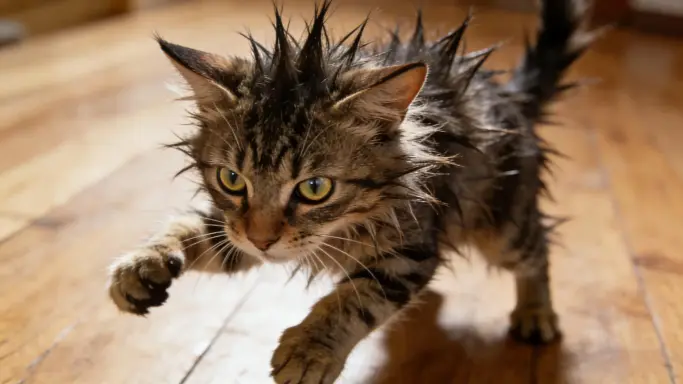
The ultimate goal of understanding cats’ body language is to better interact with them, meet their needs, and make them feel understood and loved. Different emotional signals correspond to different response methods; finding the right way can make cats trust you more.
When a cat shows signs of joy and relaxation (such as upright tail, slow blinking, stretched body), it is the best time to interact with it. You can gently stroke its head and back, play with its favorite toys, and further narrow the distance between you. When a cat shows signs of fear and tension (such as ears pressed against the head, tail tucked, body low), do not forcefully touch or chase it. Instead, find a quiet and hidden corner for it to calm down alone, and then approach and comfort it slowly after it relaxes. When a cat shows signs of irritability and anger (such as quick tail swing, hissing), stop interacting immediately, stay away from it, and give it enough space to avoid conflicts. When a cat shows signs of curiosity and excitement (such as forward-stretched whiskers, forward-tilted ears), you can provide it with new toys and new exploration space to satisfy its curiosity.
Clarifying Common Misconceptions About Cat Body Language
Many new cat owners, especially those who have raised dogs before, easily confuse cats’ body language with dogs’, leading to misunderstandings that affect communication with cats. The following are several common misconceptions to help you avoid communication pitfalls.
Misconception 1: A cat wagging its tail means it is happy. In fact, unlike dogs, which mostly wag their tails when happy, the meaning of a cat wagging its tail is more complex. A quickly wagging tail is often a signal of irritability and annoyance; only a slow and gentle tail swing may indicate concentration or relaxation. Do not mistakenly think that all tail wagging means happiness.
Misconception 2: A cat squinting its eyes means it is angry. Many people think a cat is angry or impatient when it squints, but the opposite is true. A cat squinting its eyes and blinking slowly is a sign of trust and affection, indicating that it feels very at ease by your side—it is a way for cats to express “love”.
Misconception 3: A cat lying on its back means it wants to be petted on the belly. A cat lying on its back is a sign of relaxation and trust, but it does not mean it wants its belly petted. A cat’s belly is a very fragile part; many cats do not like their bellies touched even when lying on their backs. Forcing to pet it may make it feel violated and thus attack.
Frequently Asked Questions (FAQ)
Q1: My cat always stares straight at me—is it angry?
Not necessarily. If it just stares with upright ears and a relaxed body, it is curious or wants to get your attention. If accompanied by ears pressed against the head, quick tail swing, and stiff body, it is dissatisfaction or alertness—keep a distance.
Q2: What does it mean when my cat frequently rubs against my legs?
It is a sign of affection and “marking”. Cats use scent glands to leave their scent on you, declaring ownership, and at the same time showing affection to you and expressing trust and love.
Q3: What should I do if my cat suddenly fluffs up and arches its back?
This is a defensive signal. Stop moving immediately, stay quiet, do not touch it, and comfort it slowly after its mood calms down.
Q4: My cat always squints at me—how should I respond?
This is a sign of trust. You can blink gently in response, or stroke its head slowly. Avoid sudden noise or forced contact.
Q5: My cat’s tail moves occasionally when it sleeps—is it uncomfortable?
No. This is a normal phenomenon, indicating that the cat is in light sleep, possibly dreaming or reacting to slight movements. No need to worry if its body is relaxed.